





Do you know what it is?
Iron deficiency is a public health problem and the leading cause of anemia worldwide, as well as the most prevalent nutritional deficiency. The high prevalence of this nutritional deficiency in Portugal is well recognized, as is its underdiagnosis in laboratory settings, underscoring the need for strategies to prevent, diagnose, and treat this condition.
Iron is an essential nutrient and plays a central role in many metabolic processes. Iron deficiency manifests through many nonspecific signs and symptoms (fatigue, pallor, hair loss, difficulty concentrating, intolerance to cold, …) and, in most cases, is only diagnosed when its final manifestation—anemia (hemoglobin <13 g/dL in men and <12 g/dL in women)—is investigated.
In known at-risk groups, such as pregnant women, patients with chronic kidney disease, patients with inflammatory bowel disease, or those with heart failure, iron deficiency is associated with a poorer prognosis, including increased hospitalizations and reduced quality of life and life expectancy.
Iron deficiency statistics in Portugal¹
| 31.9% of Portuguese people have IRON DEFICIENCY (ferritin <30 ng/mL) |
| 53.3% have a functional iron deficiency (ferritin <50 ng/mL) |
| It is more common in women |
| 40.7% of pregnant women have iron deficiency |
| 19.9% have anemia (84% of whom are undiagnosed) |
1 Fonseca C, Marques F, Robalo Nunes A, Belo A, Brilhante D, Cortez J. “Prevalence of anemia and iron deficiency in Portugal: the EMPIRE study.” Intern Med J. 2016;46:470–8.
Laboratory Diagnosis
2If iron deficiency is suspected, it should be confirmed through laboratory testing with:
| Complete blood count |
| Reticulocytes |
| Iron metabolism parameters |
| Transferrin saturation (TS) = iron/CTFF |
| Ferritin |
2 NOC No. 30/2015 DGS – Approach, Diagnosis, and Treatment of Iron Deficiency in Adults. Available at: https://www.dgs.pt/?cr=25229
Clinical and Laboratory Interpretation
| Reference Values for Iron Deficiency in Adults | |
|---|---|
| Absolute iron deficiency | <30 ng/mL |
| Functional Iron Deficiency | 30–50 ng/mL |
| Pregnancy | <70 ng/mL |
| Heart failure | <100 ng/mL |
| 100–300 ng/mL with ST <20% | |
| Active inflammatory bowel disease | <100 ng/mL with ST <20% |
If you have any questions, please contact us.
We'll be happy to help.
CLINICAL PATHOLOGY LABORATORY

Related news:

Rastreios gratuitos querem ajudar os po… | 2018
É a principal causa de anemia e atinge cerca de um em cada três portugueses adultos, ainda que muit…
Read more
Anemia e a deficiência de ferro com ras… | 2018
Anemia Working Group Portugal promove rastreios gratuitos para identificar a Anemia e deficiência d…
Read moreRelated articles:
Anemia (II) - Anemia and Iron
The production of red blood cells (RBCs) in the bone marrow depends on the presence in the body of essential substances such as iron, vitamin B12, and folic acid.
Read more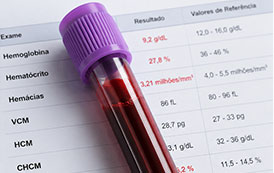
Anemia Treatment: Options and How It Works
Treatment for anemia depends on the cause and may include dietary changes, supplementation, or specific medical care. The main goal is to correct the deficiency causing the anemia and restore adequat…
Read more
Anemias (I)
Driven by the heart, blood carries substances essential to life to every cell in the body.
Read more
Anemias (III) - Vitamin B12 and Anemia
In addition to iron, a deficiency in vitamin B12 (B12) is one of the causes of anemia.
Read more
Anemias (IV) - Hemolytic Anemias
I'm sure you've heard of someone who can't eat fava beans.
Read more
Anemias (V) - Hemolytic Anemias (II)
We have already seen that hemolytic anemias result from the destruction of red blood cells (RBCs) due to external causes or internal abnormalities.
Read more
Symptoms of Anemia: How to Recognize the Signs
Symptoms of anemia may include fatigue, weakness, paleness, and shortness of breath, which occur when the body does not receive enough oxygen through the blood. These symptoms may develop gradually a…
Read more
Types of Anemia: Learn About the Differences and Causes
The types of anemia vary depending on the cause and how they affect the production or function of red blood cells. Although anemia is often associated with iron deficiency, there are different types …
Read more