





Parasites
As the name suggests, intestinal parasitic infections are infections of the gastrointestinal tract caused by a group of organisms known as “parasites.” These include organisms of very different sizes and characteristics, ranging from microorganisms (some of which can only be seen under a microscope) to parasites several meters long, such as tapeworms (more commonly known as “solitary worms”).
Although the prevalence of these organisms has decreased in recent years due to improved overall sanitary conditions among the Portuguese population, they continue to play a significant role in gastrointestinal disorders, ranging from complaints of varying severity to malabsorption syndromes, etc. The groups most affected are children, patients with compromised immune systems (e.g., those who are immunocompromised due to transplantation, HIV infection, or immunosuppressive therapy for other reasons) and travelers returning from countries with lower health standards; however, any individual with unexplained gastrointestinal symptoms should undergo testing for intestinal parasites.
Testing for these parasites is quite simple; all that is required is to collect a stool sample in a designated container, which can be easily done at home and then transported to the laboratory. The only additional requirement is that three stool samples be collected, ideally on alternate days (e.g., on Mondays, Wednesdays, and Fridays). Once the diagnosis is made, treatment is simple and generally effective, resulting in the elimination of the parasite in the vast majority of cases.
Table of Contents
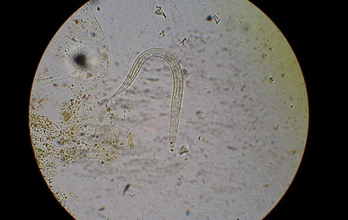
Nematodes
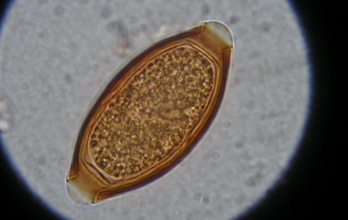
Trichuris trichiura
It is the third most common parasite in humans. It is more prevalent in countries with tropical climates and poor sanitary conditions. In mild infections, the patient is generally asymptomatic. In severe infections (especially in children), the most common symptoms are diarrhea, abdominal discomfort, and dysentery. This infection is diagnosed by examining stool samples for eggs, cysts, and parasites.
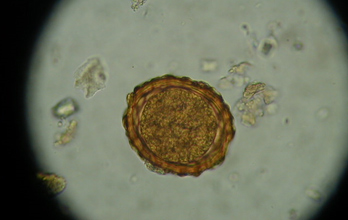
Ascaris lumbricoides
Ascaris lumbricoides is a very common intestinal parasite, with the highest prevalence among malnourished people living in countries with poor sanitation. People become infected by ingesting contaminated vegetables or fruit that have not been thoroughly washed, peeled, or cooked.
The infectious eggs are ingested, and the larvae begin a migration process from the intestine to the lungs; the adult parasites live in the small intestine and can cause intestinal diseases. Diarrhea, abdominal pain, and discomfort are common symptoms. Appendicitis, pancreatitis, biliary obstruction, and liver abscesses are possible complications. Diagnosis is made by testing stool samples for eggs or by observing and identifying the adult parasite.
This parasitic infection can be prevented by washing hands with soap and warm water before handling food. Avoid eating raw foods in endemic areas.
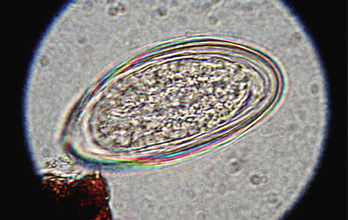
Enterobius vermicularis
This is the most common infection caused by nematodes.
Transmission occurs via the fecal-oral route.
The adult parasite resides in the cecum or rectum.
Symptoms occur when the female parasite lays eggs at night in the perianal folds or fissures (anal itching is more frequent at night).
This parasitic infection is more prevalent in children and women. Urethritis and vaginitis occur in young women with more severe infections.
Laboratory diagnosis is made by observing eggs and parasites in the stool or through the Graham test (tape test).
Strongyloides stercoralis
This parasite is classified as a helminth and is found worldwide. Unlike most intestinal parasites, transmission does not occur through the ingestion of parasitic forms, but rather through contact with soil, where the larvae can survive and are capable of penetrating human skin. Its destination is the intestine, where the adult parasite develops and lays its eggs. Here, too, this parasite behaves differently from most others, since the larvae hatch from the eggs while still inside the intestine; therefore, diagnosis of this infection is made by observing them in the stool. Another consequence of this “premature” release of the larvae is the possibility of self-infestation, that is, the larvae can initiate a new infection and develop into adult parasites without leaving the infected individual’s body, thereby perpetuating the infection, which can persist—without diagnosis or treatment—for a lifetime.
Although clinical symptoms usually manifest as mild gastrointestinal complaints, a dry cough, or rashes (spots on the body), severe and potentially life-threatening infections can occur in immunocompromised patients, such as those with HIV/AIDS, organ transplant recipients, or patients taking corticosteroids.
Hymenolepis nana
Hymenolepis nana is found worldwide and is one of the most common cestode infections in humans, particularly in children. It is the most common species in humans (Hymenolepis diminuta is rare in humans). Infection occurs primarily through the ingestion of water or food contaminated with the parasite’s eggs.
In mild infections, symptoms may be absent or limited to abdominal pain and diarrhea. In severe infections, anorexia, abdominal pain, diarrhea, headaches, and anal itching may occur.
Another common finding (4% to 16% of cases) is the presence of eosinophilia on laboratory blood count analysis.
Laboratory diagnosis is made by detecting the eggs in stool samples or by identifying the adult parasite based on specific morphological characteristics.
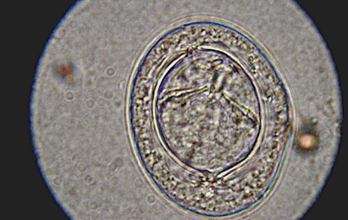
Isospora belli
It causes a disease characterized by diarrhea and malabsorption.
Its clinical significance is limited.
Severe disease is primarily associated with immunocompromised patients. In these cases, symptoms include fever, headaches, fatty diarrhea, and weight loss. Its incidence has increased with the rise in HIV prevalence.
Transmission occurs through the ingestion of contaminated water and food.
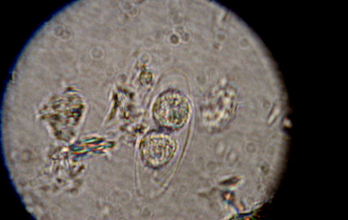
Laboratory diagnosis is made by detecting oocysts in stool samples. A diagnosis should alert the attending physician to the likely presence of risk behaviors.
If you have any questions, please contact us.
We'll be happy to help.
CLINICAL PATHOLOGY LABORATORY
