





Learn all about measles here
Measles is one of the most contagious viral infections, spreading from person to person through droplets or aerosols....
See more information on this topic below...
Table of Contents
What is measles? And how is it transmitted?
Measles is one of the most contagious viral infections, spreading from person to person through droplets or aerosols. The disease is usually mild, but in some cases, it can be severe or even fatal.
What is the incubation period?
After exposure to the virus, the incubation period is 10 to 12 days; in adults, this period may be longer than in children, lasting up to 21 days.
What are the symptoms?
The clinical manifestations are characterized by an initial nonspecific phase with fever, conjunctivitis, runny nose, and cough (prodromal phase or catarrhal period); after which small white spots appear on the oral mucosa (Koplik spots) that last 12 to 18 hours. These spots are highly suggestive of measles virus infection. The prodromal phase is followed by the appearance of a maculopapular rash (skin spots), initially on the face, then spreading to the trunk, and finally to the lower limbs. A persistent cough characterizes the recovery or convalescent phase, which may persist for up to one or two weeks after the rash has disappeared.
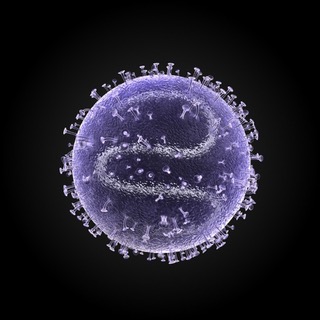
Morbillivirus.
What are the complications?
Complications caused by measles affect approximately 30% of infected individuals and are more common in young children (ages <5 years) and adults (≥20 years). The most common complications are diarrhea (8%), otitis media (7%), and pneumonia (6%). The leading cause of death in adults is acute encephalitis, a very rare complication of measles (0.1%) that can occur years after the acute illness. Adults generally experience a more severe illness than children.
What tests are available to confirm the clinical diagnosis?
The types of tests recommended for the laboratory diagnosis of measles vary depending on the stage of the disease and the time since symptom onset, specifically the appearance of the rash (skin spots).
If the illness is within the first 3 weeks, blood samples can be collected to assess the antibody profile (IgG and IgM), as well as urine samples and swabs taken from the inside of the mouth and gums to identify and isolate the virus itself in these samples.
If the rash occurred more than 3 weeks ago, it is no longer possible to isolate the virus from these samples, and the diagnosis is based on the antibody profile (IgG and IgM).
Why Is Vaccination Important?
Measles is a disease in the process of being eradicated, as the vaccine for it is included in the National Immunization Plan.
The identification of significant segments of the population that do not vaccinate their children—for example, due to a more conservative stance toward vaccination—leads to cyclical, albeit brief, epidemic outbreaks of this disease worldwide.
The measles vaccine is included in a combination vaccine containing attenuated viruses for measles, mumps, and rubella—known as the MMR vaccine or VASPR. The first dose is usually administered at 12 months of age, and a booster is given at age 5, at the start of school.
Post-vaccination reactions may occur in about 5 to 15% of cases, with a fever exceeding 39.4°C, beginning between the 5th and 12th day after vaccination. The fever usually lasts 1 to 2 days (up to 5 days). In 5% of those vaccinated, a transient rash may appear, with or without fever.
Content Development: Maria Menezes, MD / Margarida Albuquerque, MD, Clinical Pathologists at the Germano de Sousa Group
2017 National Immunization Program
SNS and DGS Guidelines—MEASLES: Procedures in Healthcare Facilities
If you have any questions, please contact us.
We'll be happy to help.
CLINICAL PATHOLOGY LABORATORY

Related news:
Vacinar é a única resposta eficaz contr… | 2018
Vacinação contra o sarampo é a única forma de tentar evitar a doença que é altamente contagiosa. Em…
Read more